College students
Historical role: mentee
The archive describes students building skills, networks, and confidence through workshops and mentor relationships.
View Student Model
Developing Future Leaders
The documented model brings students together with mentors, professionals, peers, and community partners; participants then apply the lessons through projects, service, and real conversations.
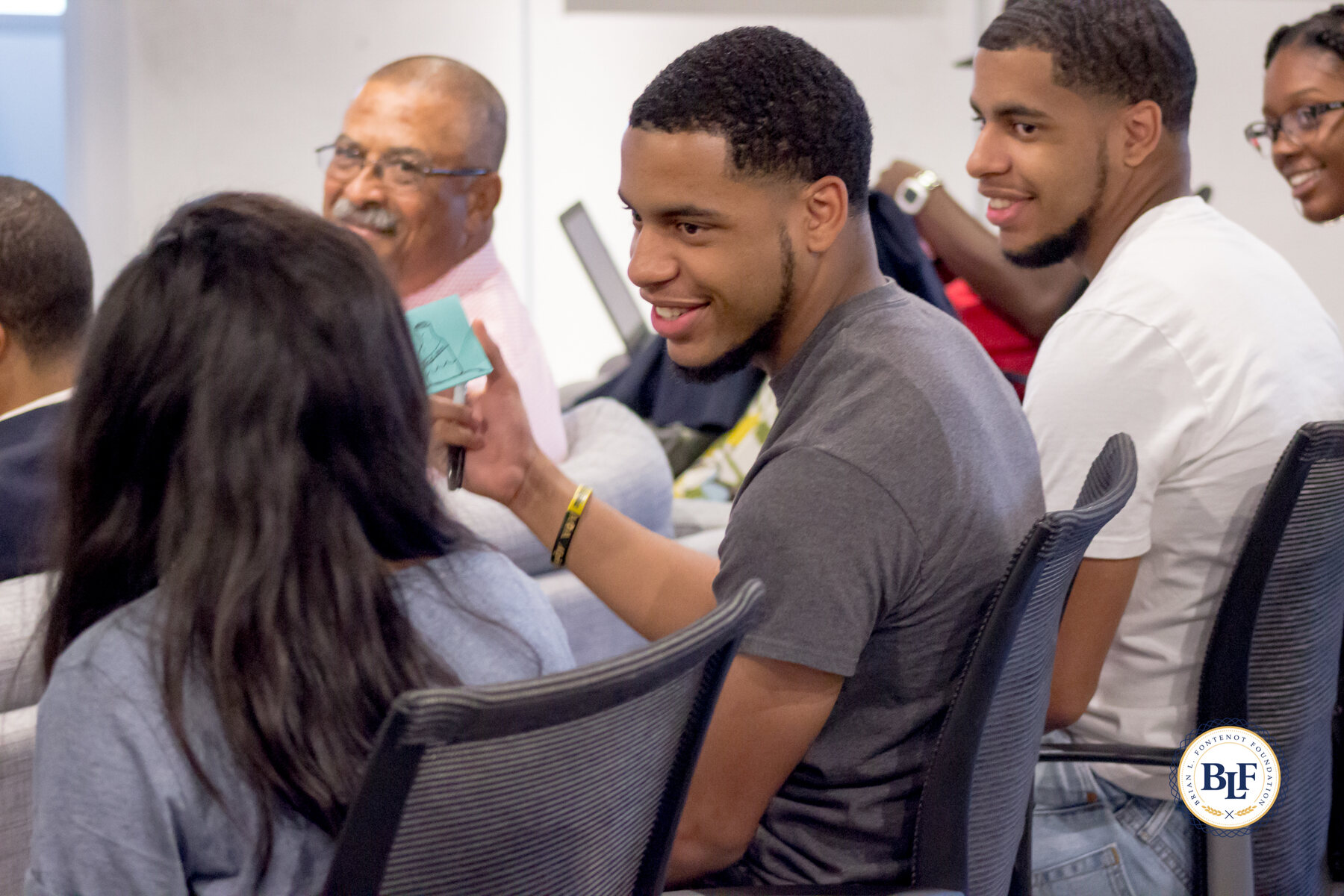
Archive program photograph – 2017
Past cohorts met monthly over a year. Contact the Foundation for information about upcoming opportunities.
Program overview
The historical Developing Future Leaders model paired college students with working professionals and brought the cohort together for interactive development sessions.
Students were encouraged to ask hard questions, compare viewpoints, complete practical assignments, build a portfolio of accomplishments, and work with mentors on service and enrichment activities.
How the model works
Pair students with working professionals who can offer perspective, encouragement, and accountability.
Bring the cohort together for interactive workshops led by program staff, speakers, and partners.
Use assignments and capstone work to translate ideas into repeatable academic and career habits.
Connect personal growth to community contribution through mentor-mentee service activities.
Curriculum themes
Past cohorts explored the following topics through workshops and projects.
A portfolio mindset
The historical program asked students to complete assignments and capstone projects that could become evidence of skills, initiative, and professional readiness.
Students used their portfolios to reflect on what they learned.
Historical participation paths
College students
The archive describes students building skills, networks, and confidence through workshops and mentor relationships.
View Student ModelWorking professionals
The archive describes professionals sharing perspective, listening, and providing consistent guidance.
View Mentor ModelProgram alumni
The archive describes alumni reinforcing their learning while helping another cohort apply program lessons.
View Alumni ModelCompanies and speakers
The archive describes organizations contributing expertise, exposure, facilities, or program support.
Contact the Foundation